Business Name: BeeHive Homes of Grain Valley
Address: 101 SW Cross Creek Dr, Grain Valley, MO 64029
Phone: (816) 867-0515
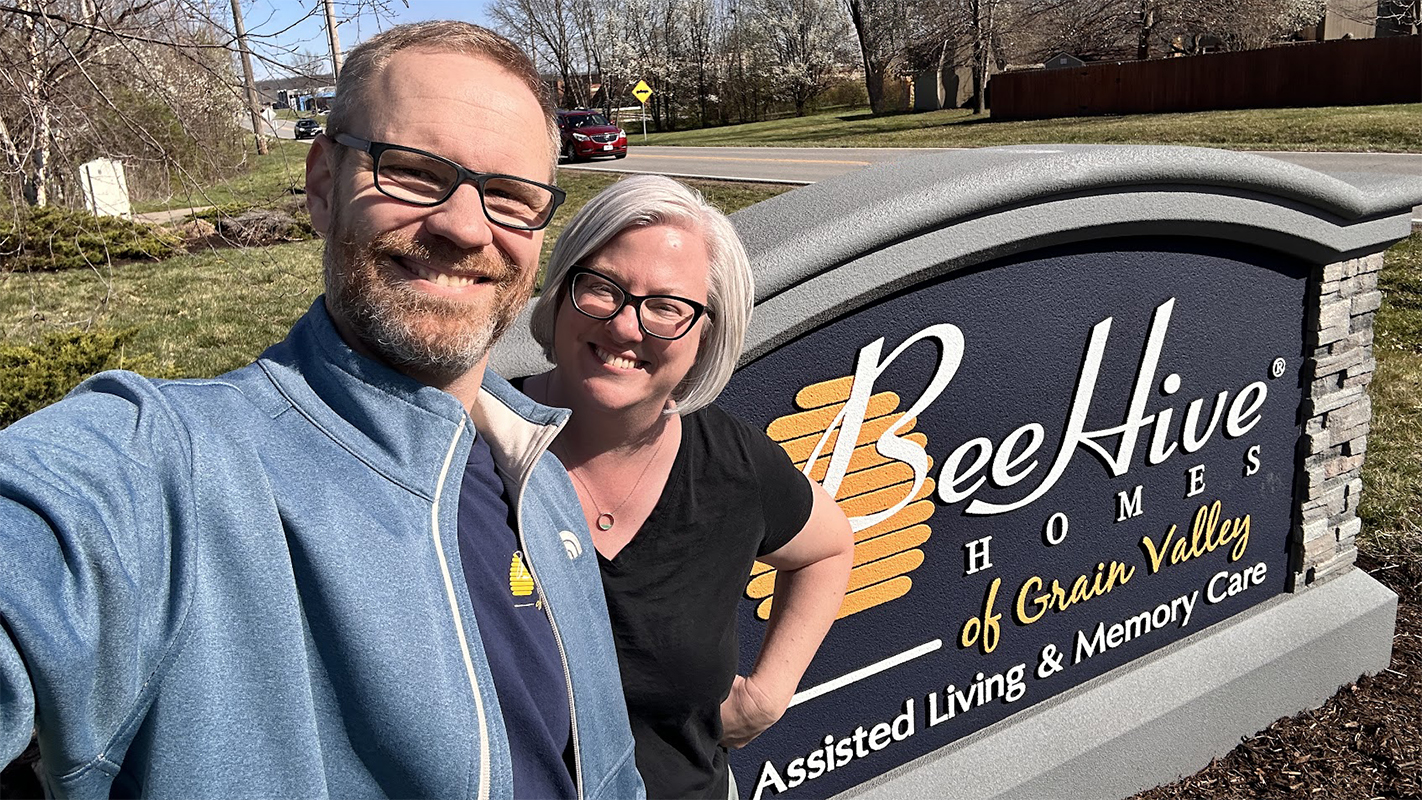
BeeHive Homes of Grain Valley
At BeeHive Homes of Grain Valley, Missouri, we offer the finest memory care and assisted living experience available in a cozy, comfortable homelike setting. Each of our residents has their own spacious room with an ADA approved bathroom and shower. We prepare and serve delicious home-cooked meals every day. We maintain a small, friendly elderly care community. We provide regular activities that our residents find fun and contribute to their health and well-being. Our staff is attentive and caring and provides assistance with daily activities to our senior living residents in a loving and respectful manner. We invite you to tour and experience our assisted living home and feel the difference.
101 SW Cross Creek Dr, Grain Valley, MO 64029
Business Hours
Monday thru Saturday: Open 24 hours
Facebook: https://www.facebook.com/BeeHiveGV
Instagram: https://www.instagram.com/beehivegrainvalley/
Families usually connect to me at a breaking point. A parent has wandered at night, medication has actually been missed out on again, or a spouse is tired from caregiving. The concern is nearly constantly the same: "Where will they feel safe and still like themselves?"
For elders dealing with amnesia, the size and feel of an assisted living community can identify whether each day is confusing and frustrating, or settled and reasonably tranquil. Bigger is not constantly better. In many cases, smaller sized settings produce the calm and predictability that a person with cognitive decrease needs in order to operate and feel secure.
This is not a one size fits all issue. I have actually seen big communities work magnificently for some locals and inadequately for others. Still, for lots of people browsing dementia care or early memory modifications, a smaller sized, more intimate environment offers clear advantages.
Why environment feels so various with memory loss
Memory loss does not simply mean forgetting names or losing secrets. With progressive dementias like Alzheimer's disease, vascular dementia, Lewy body dementia, and combined types, numerous capabilities are impacted simultaneously:
People frequently lose the capability to track time, follow complicated discussions, interpret visual details quickly, and handle interruptions. A dining room bustling with thirty or forty people can seem like a train station. A corridor with unfamiliar doors can feel like a maze. Numerous options at every turn can feel like a test they are destined to fail.
What utilized to be energizing can end up being stressful or frightening.
In senior care, environment is not simply design. It is a scientific tool. The building layout, lighting, sound level, personnel routines, and number of residents all influence habits, sleep, cravings, and mood. For individuals with memory loss, specifically those receiving memory care or dementia care supports, the threshold for overload is much lower.
What "smaller sized" really suggests in assisted living and memory care
Families typically request a specific number: "What is considered a small assisted living?" The reality is, numbers only inform part of the story.
I have actually seen forty person communities feel intimate due to the fact that they are divided into 4 unique families of 10 locals, each with its own small living-room and dining area. I have also walked into twenty resident buildings that felt institutional and anonymous, with long corridors and main dining far from the rooms.
When I talk about smaller sized settings that tend to support calm for individuals with memory loss, I am normally referring to environments with several of these qualities:
- A limited number of homeowners sharing each living area, often in the series of 8 to 16 Short, basic corridors that loop or lead plainly back to common areas A constant team of caregivers who know each resident's history, choices, and patterns Common rooms sized to seem like a home, not a hotel lobby Clear visual hints to assist with orientation, such as color coded doors, memory boxes, and uncluttered sightlines
Some of these settings are formal memory care units within a larger assisted living community. Others are standalone residential care homes, often called board and care homes, adult family homes, or group homes, depending on the state.
The licensing labels differ, however the lived experience typically comes down to the same concern: does this seem like a small, knowable world or a complex, continuously altering one?
Sensory load and the power of fewer inputs
One of the most instant differences in smaller assisted living or memory care settings is the sensory environment.
In a large neighborhood, even a well run one, there is usually a stable background of activity. More locals imply more visitors, deliveries, therapy sessions, alarms, music programs, and personnel moving in and out. Separately, none of those things are bothersome. For a brain already striving to translate and filter info, that consistent stream can be exhausting.
In smaller settings, there are just less inputs. Less people talking simultaneously. Less foot traffic past the doorway. Much shorter ranges to navigate. The dining-room might host ten homeowners rather of fifty, which allows quieter conversation and easier concentrate on the meal.
I keep in mind a retired instructor, early phase Alzheimer's, who had lived her whole life in vibrant environments. Her child worried she would be tired in a little memory care home that housed just fourteen citizens. Within a week, the daughter called me. "She is in fact more talkative," she said. "She is not shutting down at supper any longer." The content of the conversations had not changed much, however the speed had. Her mother might finally keep up.
For many elders with memory loss, that decrease in sensory clutter implies less agitation and fewer behavioral signs. We see a decline in "exit seeking" roaming, fewer angry outbursts, and less regular use of as needed stress and anxiety medications. Not since the illness has actually altered, however since the environment is no longer provoking their nerve system all day.
Familiarity, routine, and the value of predictability
Another trademark of smaller assisted living and dementia care environments is more predictable regimens. There are less personnel rotations, less dining rooms and activity areas, and less schedule modifications. For a brain that has a hard time to encode new info, predictability is a lifeline.
In a little home like setting, morning may always follow a comparable pattern: the same caretaker knocks, helps with dressing and bathing, then walks with the resident to a neighboring kitchen where breakfast is cooked. They sit in the exact same seat, near the exact same people, with familiar sounds and smells. Gradually, the regular becomes a type of muscle memory.
In bigger senior care neighborhoods, even well operated ones, minor disturbances are more common. A team member cancels, so somebody unfamiliar covers the corridor. A big bus trip pulls lots of homeowners and staff away. The dining-room requires to accommodate a huge family luncheon, so some tables are reorganized. None of this is incorrect, but for a resident already confused about time and place, it can compound uncertainty.
Predictable does not mean rigid. The best little settings I have seen mix reliable rhythms with flexible, person focused options. For example, a resident who has always been a late riser is not dragged out of bed to "fit" the schedule. Instead, the schedule bends within a known structure. Breakfast may be available over a wide window, however still served in the same cozy dining area with the exact same team.
When regular lives in the environment rather than in a printed calendar, senior citizens with memory loss do not have to remember the schedule. Their environments assist them.

Relationships: why smaller sized groups frequently mean much deeper knowing
Ask any knowledgeable nurse or administrator what makes or breaks dementia care, and sooner or later they will speak about personnel connection. The more a caregiver understands a resident, the much better they can anticipate requirements, interpret habits, and de intensify problems.
Smaller assisted living and memory care settings tend to have:
Fewer citizens per caregiver throughout the busiest times of day. This does not constantly show up nicely in staffing ratios, however you can feel it when you stroll in. Staff are not power walking from one end of the building to the other. They are distributing within a small, specified space.
Stable staff projects. When the structure is smaller, it is more possible to designate the same caretaker to the same group of citizens throughout many shifts. Over weeks and months, they discover who needs a mild joke to accept a shower, who dislikes having their hair brushed in the morning, or who will only take medications with yogurt.
Stronger familiarity with families. In a cottage design memory care home, families usually understand the names and faces of the entire staff. They are seen, not lost in the crowd. This makes communication about subtle changes in habits or health much easier.
Deeper relationships are not simply mentally pleasing. They are clinically protective. A caregiver who knows that Mr. H always paces for ten minutes before dinner is less likely to translate that pacing as agitation requiring medication. Instead, they stroll with him, chat, or provide a little task. That kind of educated reaction is even more most likely in environments where staff are consistently caring for the same small group.
Safety and autonomy: balancing liberty in smaller sized spaces
Families frequently assume that a small setting is automatically more secure. The reality is more nuanced.
Smaller buildings, specifically those created for dementia care, can be easier to make secure. There are fewer outside doors to keep an eye on and less range in between rooms and typical areas. Staff can visually scan the entire environment more easily, which supports supervision.
At the exact same time, the scale of the space enables a kind of "freedom within limits." Homeowners can move about without coming across complicated crossways, several wings, or long elevator trips. For someone who tends to wander, looping hallways that bring them naturally back to a central living room are frequently much less traumatic than a locked door at the end of a long corridor.
Physical safety is only one piece of autonomy. Emotional security matters too. Citizens are typically more willing to take small independent actions in a familiar, less overwhelming space: putting their own coffee, folding laundry at the cooking area table, watering plants on the patio. These regular actions reinforce a sense of self and skills that disease attempts to erode.
Of course, smaller does not instantly imply better security. A small residential care home that is poorly staffed, poorly maintained, or not geared up for higher care needs can put locals at risk. You want "small however strong", not simply "small".
The role of respite care in testing the fit
For households unsure about transitioning a loved one into full-time assisted living or memory care, brief stays can be important. Respite care, which typically provides a furnished space and complete look after durations varying from a couple of days to a couple of weeks, provides everyone a trial run.
In smaller sized settings, respite stays often offer a clear view of how the environment may support or challenge an individual with amnesia. I generally motivate families to take note of three things during and after a respite:
First, sleep patterns. Does your member of the family sleep more peacefully, with fewer night time calls or roaming episodes, in the calmer environment? Small settings with foreseeable evenings and decreased noise can often smooth out sleep wake cycles.
Second, mood and habits. After an initial adjustment duration, exists less anxiety, anger, or tearfulness? Do they appear more at ease with personnel and other citizens? Sometimes the emotional temperature in your home is greater than anyone recognizes up until it changes.
Third, function. Are they eating more consistently, participating in discussion, or walking more safely? A smaller sized, scaffolded environment can silently support these functions without making the person feel "handled."
Respite care is likewise a chance for households to experience their own relief. It prevails for partners or adult children to sleep through the night for the first time in months. That alone can change how they think about long term senior care options.
When larger assisted living may fit better
It would be soothing if the answer were constantly "smaller is better." Individuals are more diverse than that.
There are scenarios where a larger assisted living or memory care community truly serves a person much better. For instance:
A highly social resident in really early phase memory loss may flourish on a larger menu of activities, getaways, and peer groups. A little family might not provide enough different stimulation to keep them engaged.
Residents with complicated medical requirements that verge on proficient nursing might be safer in bigger neighborhoods with on site nurses 24/7, more routine physician rounding, and direct connections to rehab or medical facility systems.
Families who reside in rural areas might have access only to a couple of bigger facilities close by. For them, the familiarity of regular visits can outweigh the drawbacks of a larger building.
There are likewise larger neighborhoods that intentionally produce "little worlds within a huge one" through committed memory care wings, constant staffing, and thoughtful style. I have seen homeowners do very well there, particularly when the memory care system itself is designed with smaller group living in mind.
The key is to examine not only the size, but how that size is lived day to day.
What to try to find when touring smaller sized memory care or assisted living
Families frequently walk into a building and focus first on finishes: the paint color, the furnishings, the courtyard. Those information do matter, but the much deeper questions are about rhythms, relationships, and responsiveness.
When you tour a smaller assisted living, residential care home, or memory care home, it can assist to bring a compact set of concerns. Here is one method to structure that conversation.
- How many citizens share this living space, and how is the day arranged for them? What is the common caretaker to resident ratio throughout early mornings and evenings? Do the very same team member care for the very same residents most days? How do you handle habits like wandering, refusal of care, or agitation? Can you share an example of how you changed regimens for one specific resident?
Listen not just to the content of the answers, however to the ease and specificity. Unclear reactions like "We handle that all the time" without concrete examples are red flags. You want to hear real stories, not just reassuring phrases.
Pay attention to your own body while you tour. Do you feel yourself unwinding as you move through the space, or discreetly bracing? Do residents look engaged or parked? Are personnel speaking about residents with respect, and straight to them, even if the person does not fully respond?
Smaller does not immediately imply warm. You are searching for a mix of scale and culture that matches your relative's requirements and temperament.
Family participation in smaller settings
One underappreciated advantage of lots of small assisted living and dementia care homes is the ease of household involvement.
In big neighborhoods, relative sometimes seem like visitors in a hotel. There is a reception desk, a check in procedure, several hallways to browse, and a sense of being one of lots of. Personnel may be kind however hurried. Info can get siloed between departments.
In a smaller home like environment, households frequently slip more naturally into the everyday material. You might be welcomed to sit at the kitchen table during coffee time, help with a craft, or walk a group of citizens in the garden. This type of casual involvement can preserve a sense of partnership and alleviate the guilt numerous families bring about "positioning" an enjoyed one.
At the exact same time, smaller sized settings rely greatly on clear communication. With a tight knit personnel and compact structure, modifications can ripple rapidly. Families who flourish in these environments typically:
Communicate truthfully about what is taking place in the house, including falls, habits modifications, and medications.
Accept guidance from personnel who see the resident in a different context.
Respect boundaries around security, infection control, and care protocols, while still advocating when something feels off.
When the relationship works, it can be transformative. I have enjoyed families move from a crisis driven, sleep deprived presence in your home to a sustainable rhythm where visits have to do with connection, not logistics.
Cost, regulation, and the useful bottom line
No discussion about senior care is complete without acknowledging cost and guideline. Little settings and larger communities both operate within state licensing structures that determine what they can and can not do.
In many areas, residential care homes and little memory care environments are certified likewise to assisted living, with policies about staffing, medication administration, fire safety, and more. They may not, however, be needed to utilize nurses on site at all times. This can affect their capability to handle certain medical conditions, from feeding tubes to complicated injury care.
Financially, smaller sized does not constantly imply less expensive. In some markets, intimate memory care homes with high staff ratios are priced at a premium compared to bigger communities. In others, they are more modest since they lie in residential neighborhoods instead of large commercial campuses.
Families should ask straight about:
What is included in the base rate versus charged as an add on (bathing support, medication management, incontinence care, transport).
How rates increase in time, particularly as care needs intensify.
Whether respite care stays are available and how those are billed.
Any differences in funding eligibility for small homes versus larger facilities, such as Medicaid waivers or long term care insurance coverage.
The objective is not just to discover a calm environment for today, however a sustainable prepare for the months and years ahead.
Finding calm that fits the person, not simply the diagnosis
Dementia care and memory care are frequently described in scientific terms: stages, ratings, habits. Yet the daily experience is exceptionally personal. A veteran utilized to structure and hierarchy might react differently to an environment than an artist utilized to flexibility and privacy. A long-lasting city dweller may crave more bustle than somebody who spent decades in a rural town.
Smaller assisted living and memory care settings offer an effective tool for producing calm, however they are not magic. They work best when their intimacy is matched with thoughtful shows, knowledgeable personnel, and a real regard for each resident's history.
When I walk through a little home created for senior citizens with memory loss and it is working well, I observe particular things: the hum of conversation rather of television blaring, the odor of soup or cookies, the soft clatter of dishes in a real cooking area. A caretaker kneels dementia care to be at eye level with a resident. Somebody laughs in the corridor. Nobody is rushing.
For families facing the hard decision to look for assisted living, respite care, or long term dementia care, that type of environment can seem like a compromise in between independence and security that still honors the individual they like. Not a best response, however a gentler next chapter.
The option of setting is not about square footage alone. It is about producing a world that is little enough to be knowable, consistent enough to be calming, and human adequate to protect self-respect, even as memory fades.
BeeHive Homes of Grain Valley provides assisted living care
BeeHive Homes of Grain Valley provides memory care services
BeeHive Homes of Grain Valley provides respite care services
BeeHive Homes of Grain Valley offers 24-hour support from professional caregivers
BeeHive Homes of Grain Valley offers private bedrooms with private bathrooms
BeeHive Homes of Grain Valley provides medication monitoring and documentation
BeeHive Homes of Grain Valley serves dietitian-approved meals
BeeHive Homes of Grain Valley provides housekeeping services
BeeHive Homes of Grain Valley provides laundry services
BeeHive Homes of Grain Valley offers community dining and social engagement activities
BeeHive Homes of Grain Valley features life enrichment activities
BeeHive Homes of Grain Valley supports personal care assistance during meals and daily routines
BeeHive Homes of Grain Valley promotes frequent physical and mental exercise opportunities
BeeHive Homes of Grain Valley provides a home-like residential environment
BeeHive Homes of Grain Valley creates customized care plans as residents’ needs change
BeeHive Homes of Grain Valley assesses individual resident care needs
BeeHive Homes of Grain Valley accepts private pay and long-term care insurance
BeeHive Homes of Grain Valley assists qualified veterans with Aid and Attendance benefits
BeeHive Homes of Grain Valley encourages meaningful resident-to-staff relationships
BeeHive Homes of Grain Valley delivers compassionate, attentive senior care focused on dignity and comfort
BeeHive Homes of Grain Valley has a phone number of (816) 867-0515
BeeHive Homes of Grain Valley has an address of 101 SW Cross Creek Dr, Grain Valley, MO 64029
BeeHive Homes of Grain Valley has a website https://beehivehomes.com/locations/grain-valley
BeeHive Homes of Grain Valley has Google Maps listing https://maps.app.goo.gl/TiYmMm7xbd1UsG8r6
BeeHive Homes of Grain Valley has Facebook page https://www.facebook.com/BeeHiveGV
BeeHive Homes of Grain Valley has an Instagram page https://www.instagram.com/beehivegrainvalley/
BeeHive Homes of Grain Valley won Top Assisted Living Homes 2025
BeeHive Homes of Grain Valley earned Best Customer Service Award 2024
BeeHive Homes of Grain Valley placed 1st for Senior Living Communities 2025
People Also Ask about BeeHive Homes of Grain Valley
What is BeeHive Homes of Grain Valley monthly room rate?
The rate depends on the level of care needed and the size of the room you select. We conduct an initial evaluation for each potential resident to determine the required level of care. The monthly rate ranges from $5,900 to $7,800, depending on the care required and the room size selected. All cares are included in this range. There are no hidden costs or fees
Can residents stay in BeeHive Homes of Grain Valley until the end of their life?
Usually yes. There are exceptions, such as when there are safety issues with the resident, or they need 24 hour skilled nursing services
Does BeeHive Homes of Grain Valley have a nurse on staff?
A consulting nurse practitioner visits once per week for rounds, and a registered nurse is onsite for a minimum of 8 hours per week. If further nursing services are needed, a doctor can order home health to come into the home
What are BeeHive Homes of Grain Valley's visiting hours?
The BeeHive in Grain Valley is our residents' home, and although we are here to ensure safety and assist with daily activities there are no restrictions on visiting hours. Please come and visit whenever it is convenient for you
Do we have couple’s rooms available?
Yes, each home has rooms designed to accommodate couples. Please ask about the availability of these rooms
Where is BeeHive Homes of Grain Valley located?
BeeHive Homes of Grain Valley is conveniently located at 101 SW Cross Creek Dr, Grain Valley, MO 64029. You can easily find directions on Google Maps or call at (816) 867-0515 Monday through Sunday Open 24 hours
How can I contact BeeHive Homes of Grain Valley?
You can contact BeeHive Homes of Grain Valley by phone at: (816) 867-0515, visit their website at https://beehivehomes.com/locations/grain-valley, or connect on social media via Facebook or Instagram
The Harry S Truman National Historic Site offers historical enrichment that can be enjoyed by seniors receiving assisted living, elderly care, or respite care with family support.